
 English
 Español
 Deutsch
Rainwear design involves constant compromise. Tight-fitting coats keep water out but restrict movement. Loose garments offer freedom but may feel bulky. A loose raincoat attempts to resolve this tension by prioritising space and ease of motion over a tailored fit.
How loose cut changes the wearing experience
Standard rain jackets follow body contours. A loose raincoat does the opposite. The garment drapes over the body without cinching at the waist or arms. This creates air space between fabric and skin.
The practical effect is noticeable. Bending, reaching, and twisting become easier inside a loose raincoat. Shoulders move freely. Elbows are not constrained. The wearer does not feel wrapped in a restrictive shell.
For people who wear rain gear over thick layers or work clothes, a loose raincoat accommodates the extra bulk. The same garment fits over a sweater in winter or a uniform shirt in summer.
Square shape serves multiple purposes
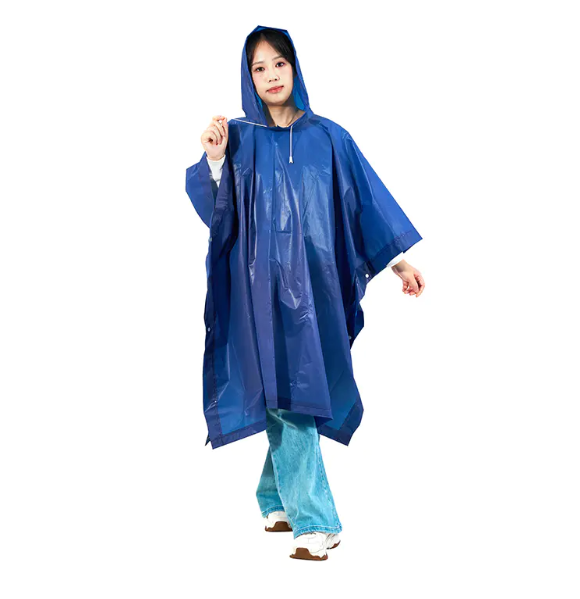
Many loose raincoat models use a square or rectangular panel construction. This is not accidental. The flat panels create a cape-like silhouette that hangs straight from the shoulders.
The square shape of a loose raincoat allows it to cover a backpack worn underneath. Commuters who cycle with a bag do not need to choose between protecting themselves and their cargo. Both stay dry.
The generous dimensions of a loose raincoat also improve airflow. Air moves through the space between fabric and body. This reduces the stuffy feeling common in close-fitting waterproof garments.
Quick on and off matters in changing weather
Rain showers are often sudden. A loose raincoat can be put on in seconds. No struggling with sleeves that catch on watchbands. No adjusting zippers that snag.
Removing a loose raincoat is equally fast. When the rain stops, the garment comes off without peeling layers or undoing multiple fasteners. This matters for commuters and outdoor workers who move between indoor and outdoor environments.
The simple construction of a loose raincoat also means fewer failure points. No broken zippers. No torn armpit seams. The open design distributes stress across large fabric areas rather than concentrating it at seams.
Where this design works best
Outdoor hiking is a natural fit for a loose raincoat. Trails often involve sudden weather changes. The ability to deploy or stow rain gear quickly improves the experience.
Fishing benefits from loose rainwear. Casting requires full shoulder rotation. A loose raincoat allows this motion without binding or riding up.
Concertgoers and amusement park visitors need rain gear that fits over existing clothing. A loose raincoat goes on over jackets, hoodies, or costumes without requiring the wearer to undress.
Cycling presents a unique test. A loose raincoat must be long enough to cover the back when leaning forward. Quality designs account for this riding position with extended rear panels.
Material choice affects weight and packability
PEVA is a common material for lightweight loose raincoat products. The acronym stands for polyethylene vinyl acetate. It is softer than traditional PVC and contains no chlorine.
A PEVA loose raincoat weighs significantly less than rubberised fabric versions. The material folds into a small package. Users can carry a PEVA loose raincoat in a bag or pocket without noticing the weight.
Thickness varies between products. A thinner loose raincoat packs smaller but offers less durability for repeated use. Thicker material withstands more wear but takes up more storage space.
EVA is another option. It shares similar weight characteristics with PEVA but has different flexibility properties. A loose raincoat made from EVA feels slightly different to the touch.
Balancing coverage and mobility
The loose fit creates a tradeoff. More fabric means more coverage. But excess material can catch on branches, pedals, or railings.
A well-designed loose raincoat manages this with strategic shaping. The hem falls to mid-thigh on most adults. Side snaps or ties allow the wearer to adjust the silhouette when needed.
Some loose raincoat models include elastic cuffs or thumb loops. These features prevent sleeves from sliding down during arm movement while maintaining the loose fit through the body.
Storage and care considerations
A loose raincoat folds differently than tailored rain jackets. The simple shape packs into a rectangle rather than needing to be rolled.
Cleaning a loose raincoat is straightforward. Wipe with a damp cloth after use. Hang to dry away from direct heat. Do not store while damp.
For occasional use, a lightweight loose raincoat provides years of service. The simple construction has few parts to fail. When properly cared for, the material outlasts the user's need for the garment.
The loose raincoat category exists because one type of rainwear cannot serve every need. For users who prioritise freedom of movement, easy on-off, and backpack compatibility, a loose raincoat offers practical advantages that fitted rain jackets cannot match. The choice depends on how and where the garment will be used.
