
 English
 Español
 Deutsch
Two raincoats can look nearly identical on a product page and still perform completely differently in a downpour that lasts three hours instead of thirty minutes. The difference usually comes down to what sits between the outer shell and the wearer's body. A Heavy Duty Waterproof Raincoat is built around that gap, using layered construction to keep water out long after a thinner single-layer poncho has started to wet through.
Why Layer Structure Matters More Than Fabric Weight
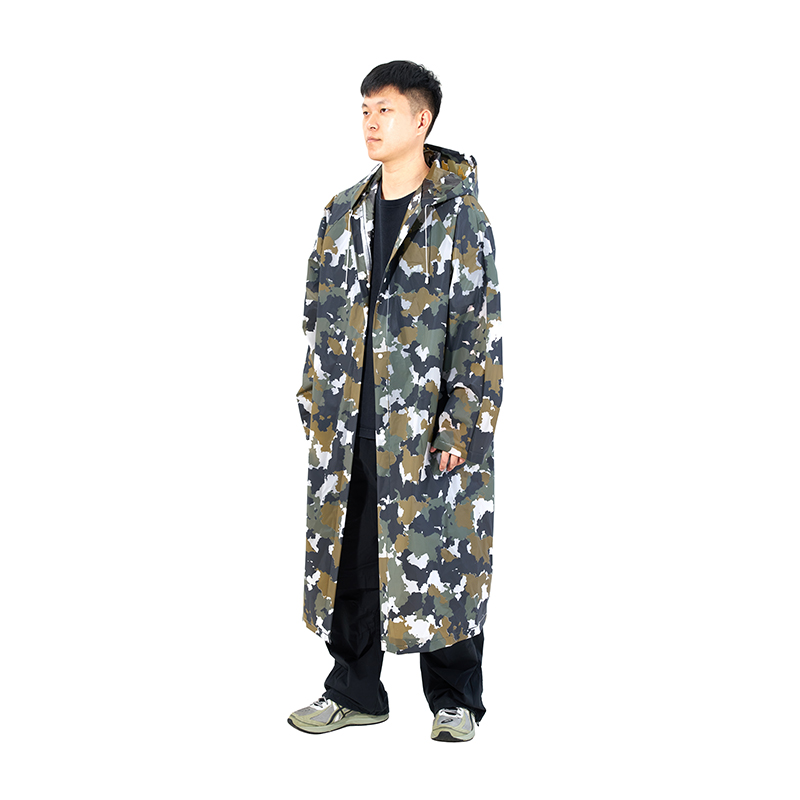
Buyers new to rainwear sourcing sometimes assume that a heavier fabric alone determines protection level, but the layer structure inside a Heavy Duty Waterproof Raincoat matters just as much as raw material thickness. A typical construction pairs an outer waterproof coating with a middle impermeable layer and an inner comfort layer, and it is this combination that sustains performance across hours of continuous rainfall rather than a single quick shower. Fabric thickness on its own can resist tearing without necessarily holding a waterproof seal once seams and stress points are factored in, which is why factories test the full assembly rather than the raw material alone.
Materials Used in Reinforced Rainwear Production
The base material for a Heavy Duty Waterproof Raincoat is typically thickened EVA or a comparable composite fabric, chosen for wear resistance and tear resistance under repeated flexing at the shoulders and elbows. Reinforced seam taping and a hooded, long-length cut extend coverage further than standard-length rainwear, which matters for wearers who spend extended periods outdoors rather than moving briefly between sheltered points. The oversized, loose-fitting silhouette common to this category also serves a functional purpose beyond comfort — it allows the garment to be worn over bulky work clothing or a backpack without restricting movement.
Where Reinforced Construction Earns Its Keep
|
Use Environment |
Standard Rainwear |
Heavy Duty Waterproof Raincoat |
|
Rain Duration |
Short, intermittent showers |
Extended, continuous rainfall |
|
Wind Exposure |
Light |
Moderate to strong |
|
Typical Wearer Activity |
Brief transit, commuting |
Outdoor work, cycling, fishing |
|
Seam Reinforcement |
Basic |
Taped or double-stitched |
|
Expected Reuse Cycle |
Limited |
Extended, wash-and-reuse |
Buyers sourcing for outdoor labor, construction, or extended fieldwork applications generally prioritize the right-hand column of this comparison, while buyers targeting occasional commuter use can source a lighter category without the added material cost.
Quality Control Standards for Reinforced Rainwear
Manufacturing a Heavy Duty Waterproof Raincoat at export volume requires consistent quality control across every production batch, not spot checks on a handful of samples. Seam integrity is tested under simulated water pressure to confirm the waterproof layer holds at stress points, and tear resistance is measured on the finished garment rather than only on raw fabric rolls, since cutting and stitching can introduce weak points that raw-material testing would miss. Colorfastness and wash durability are checked separately, since a durable rain poncho intended for repeated use needs to hold its waterproof rating after multiple wash cycles, not only when new.
Customization and Bulk Supply Considerations
Distributors placing bulk orders for a Heavy Duty Waterproof Raincoat line typically negotiate around three variables: color range, closure style, and branding placement. A front-opening design with zipper closure suits buyers targeting work environments where quick removal matters, while a pullover-style reinforced raincoat suits buyers prioritizing full weather sealing over convenience. Factories running dedicated production lines for thick waterproof rainwear can usually accommodate mixed-SKU container orders, letting a distributor test more than one closure style within a single shipment rather than committing an entire order to one configuration.
Positioning Within a Broader Rainwear Catalog
A Heavy Duty Waterproof Raincoat occupies a specific place alongside lighter eco-friendly ponchos and disposable event rainwear — it is not meant to replace those categories but to serve buyers whose end users face heavy rainfall protection needs that a lighter product cannot reliably meet. Sourcing teams building a full catalog often stock both categories side by side, positioning the reinforced line for professional and outdoor-labor customers while keeping lighter options available for general commuter demand.
