
 English
 Español
 Deutsch
Riding an electric scooter in the rain creates real risks. Wet handlebars, blurred vision, and slippery roads all threaten your balance. A scooter poncho raincoat addresses these dangers through specific design features. This guide examines safety from three angles: vision, movement, and scooter control. You will learn how the right rain gear actually reduces accident risks.
Vision Safety Inside a Scooter Poncho Raincoat
Keeping your eyes on the road is the first rule of riding. A scooter poncho raincoat uses a transparent brim over the hood. This clear panel sits above your eyes, blocking rain from your face while letting you see traffic signals, potholes, and pedestrians. Unlike opaque hoods that force you to peek around edges, this design keeps your full field of view open.
The poncho also includes practical openings for rearview mirrors. Many scooter riders rely on these mirrors for lane changes and turns. A scooter poncho raincoat fits over the mirrors without blocking them. You check behind you with a quick glance, same as on a dry day. Some cheap rain capes cover mirrors entirely, forcing dangerous head turns. This product avoids that flaw.
- Transparent brim stops rain from dripping into eyes.
- Mirror openings preserve rear visibility.
- Wide hood allows peripheral vision for cross traffic.
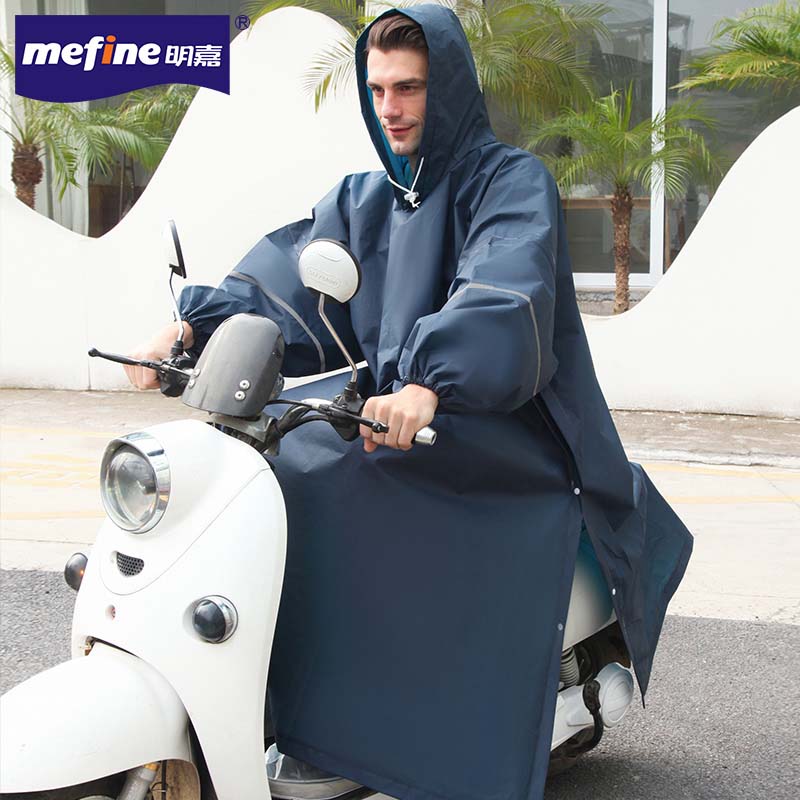
Material Safety and Scooter Control
A scooter poncho raincoat uses thickened waterproof material. This thickness matters because thin plastic can catch the wind and balloon upward. When a loose poncho fills with air, it pulls on your neck and shifts your center of gravity. Thickened fabric resists wind lift, keeping the poncho draped close to your body.
The cape-style design covers both you and the scooter’s handlebar area. This coverage prevents rain from pooling on your lap or soaking the scooter’s display screen. More importantly, a scooter poncho raincoat does not have loose sleeves that snag on handlebars. Snagged sleeves have caused riders to lose steering control. The poncho’s open-side design eliminates this risk.
Key safety features for control:
- No loose sleeve ends to catch on grips or mirrors.
- Weighted hem stays down during wind gusts.
- The front opening allows a quick exit if you need to put a foot down.
Emergency Exits and Quick Dismounts
Sometimes you must leave the scooter fast. A car door opens ahead. A child runs into the street. A scooter poncho raincoat allows rapid dismount because it has no complex zippers or buttons. You pull it over your head in one motion, same as putting it on. This quick-release property is essential for emergency stops.
The poncho also fits over a backpack or work bag. Commuters often carry laptops or a change of clothes. A scooter poncho raincoat sized correctly lets you wear your bag underneath. When you arrive at your destination, you remove the poncho first, then your bag. No awkward untangling of straps through poncho holes.
Visibility to Other Vehicles
Being seen is as important as seeing. A scooter poncho raincoat comes in stylish colors including bright options. Yellow, orange, or lime green ponchos contrast with gray rainy streets. Drivers inside cars have lower visibility during storms. A bright poncho catches their attention earlier than dark clothing or clear plastic.
Reflective strips are available on many models. These strips shine in headlights from blocks away. For evening commutes or early morning rides, reflective elements turn a scooter poncho raincoat into active safety gear. You become visible from angles that colored fabric alone cannot achieve.
Comparison: Scooter Poncho vs. Standard Rain Jacket for Riding
|
Safety Feature |
Scooter Poncho Raincoat |
Standard Rain Jacket |
|
Leg coverage |
Full coverage down to the knees |
Upper body only, wet pants |
|
Handlebar clearance |
Designed to drape over controls |
Jacket sleeves end at the wrists |
|
Mirror visibility |
Built-in openings |
Mirrors get covered or ignored |
|
Wind lift resistance |
Thickened material resists ballooning |
Thin jackets flap constantly |
|
Quick removal |
One pull-over head |
Requires unzipping both arms |
Riding Posture and Comfort Safety
Electric scooter riding involves a standing or semi-standing posture. A scooter poncho raincoat is cut specifically for this position. The front extends lower than the back, covering your shins while you stand. Standard rain jackets ride up when you stand, exposing your thighs to rain. Wet pants distract you and lower body temperature, reducing reaction time.
The poncho’s wide cut also accommodates your feet on the deck. You can shift weight between feet, look over your shoulder, or lean into turns without tearing the material. A scooter poncho raincoat moves with your body rather than resisting it. This freedom of motion keeps your balance responses natural.
Who Needs This Specific Safety Design
Daily scooter commuters benefit most. If you ride more than 15 minutes each way, a scooter poncho raincoat prevents rain fatigue. Delivery riders who work in all weather need the quick exit feature. Campus students walking scooters between classes appreciate the easy on and off. Shared scooter users in rainy cities rely on poncho portability.
For parents riding with children on the back, a scooter poncho raincoat covers the front rider while keeping arms free to hold handlebars. Your child wears their own rain gear. You stay dry and in full control.
Final Safety Checklist
Before buying a scooter poncho raincoat, confirm these safety elements:
- Transparent brim or visor on the hood.
- Rearview mirror openings or clear pocket areas.
- Thickened material that resists wind lift.
- Bright color option for daytime visibility.
- Quick-pull design with no permanent fasteners.
A scooter poncho raincoat is safe when designed correctly. It preserves vision, allows quick exits, and keeps you visible. Rainy commutes become manageable rather than dangerous. Choose a poncho built for riding, not just walking, and your daily trip stays secure.
