
 English
 Español
 Deutsch
A Printed Rain Coat looks like a straightforward combination: take a waterproof shell, add a cute pattern, done. What actually happens at the factory is closer to layering two processes that were never designed to work together. The waterproof performance comes from a coating or film bonded to the fabric surface, and the print sits directly on top of, or sometimes underneath, that same layer. Get the sequence or the ink chemistry wrong and a buyer ends up with a raincoat that looks great on a hanger and lets water through at every seam by the third wear.
Print Method Decides Whether The Waterproof Layer Survives
Heat transfer printing applies pattern and heat together, and that heat is exactly what a PU or PEVA coating is sensitive to. Push the transfer temperature too high, or hold it too long to get sharp polka dot edges on a busy pattern, and the coating underneath can soften or thin in that spot, leaving a pinhole-level weak point that only shows up once the garment gets tested by an actual downpour. Water-based screen printing runs cooler and tends to sit more gently on a coated surface, but it struggles with the fine detail smaller prints need, which is part of why a Printed Rain Coat aimed at younger kids sometimes trades a crisper cartoon face for a simpler, bolder pattern that the printing process can hold onto without damaging the layer underneath it.
Color Bleed Risk Rises When Rain And Sun Hit The Same Garment
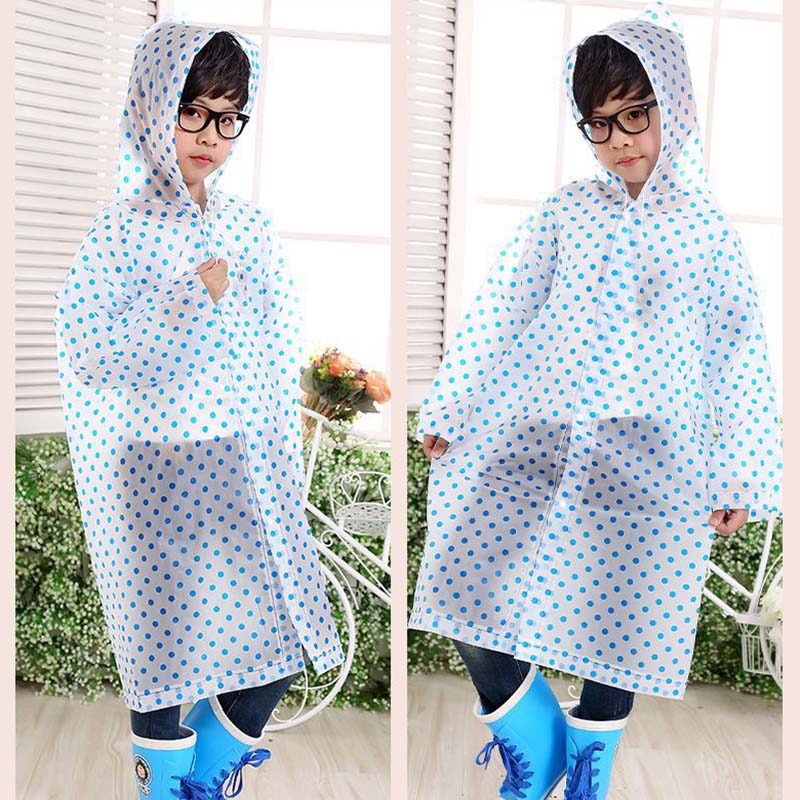
A raincoat spends its working life cycling between wet and dry, often with direct sun exposure baked into the same afternoon. That combination stresses pigment differently than either condition alone would. Ink that holds its color through a wash test can still migrate or fade faster once UV exposure breaks down the binder holding it to the fabric, and a bright polka dot or character print loses definition well before the waterproof coating itself shows any sign of wear. A Printed Rain Coat ordered for a market with long, sunny wet seasons needs colorfastness testing that includes a UV cycle alongside the standard wash and rub tests, because a pattern that passes a rub test in a lab can still bleed onto a child's hands during actual outdoor play.
Pattern Registration Gets Harder As Sizes Get Smaller
Aligning a printed pattern across a seam, a hood edge, or a snap closure gets more demanding the smaller the garment gets, since the same registration tolerance that looks fine on an adult-size panel becomes visibly off on a toddler-size hood where every seam sits closer together. A Printed Rain Coat built across a full size range needs the print file rescaled and re-checked for each size rather than simply shrinking one master pattern, or a character's face ends up split awkwardly across a seam on the smallest sizes even though the largest size in the same order looks correct.
None of these three factors show up in a swatch sample pulled straight off the printing table. A Printed Rain Coat that holds its pattern and its waterproofing together through a full season of actual rain depends on the print method matching the coating, colorfastness testing that accounts for sun exposure, and registration checked size by size rather than assumed to scale evenly across a range.
