
 English
 Español
 Deutsch
A Thin Film Raincoat is designed around a simple balance: practical rain coverage with very little material, weight, and storage volume. Unlike structured rain jackets intended for extended outdoor work, this type of rainwear is commonly associated with travel, commuting, outdoor events, emergency kits, and unexpected rainfall. That use case influences decisions involving film thickness, garment dimensions, folding, packaging, and printing.
Film Thickness Shapes the Product
A Thin Film Raincoat normally relies on thin plastic film, with polyethylene commonly used for disposable versions. Reducing material thickness can lower unit weight and folded volume, making the garment easier to distribute in large quantities. Yinhong describes its disposable raincoats as lightweight PE products with foldable structures and weights of only a few grams.
The trade-off is that thinner film also changes handling and resistance to tearing. Manufacturers therefore need to define the expected usage period before deciding how thin the film should be. A product intended for one unexpected shower has different requirements from a reusable rain layer.
Simple Construction Supports Fast Deployment
A Thin Film Raincoat often uses a simple pullover or drape-style structure. Fewer panels, seams, and components can simplify production and allow the finished garment to be folded into a compact package.
This production logic is useful for concerts, tourist attractions, outdoor events, and emergency supply programs where large quantities may need to be stored and distributed. Yinhong's industry information emphasizes light weight, compact folded volume, and rapid deployment for disposable rainwear.
For B2B buyers, packaging is therefore part of the product design. Individual wrapping, folded dimensions, carton quantity, and transport volume can affect the practicality of bulk distribution.
Coverage Still Depends on Pattern Design
Lightweight construction does not remove the need to cover the parts of the body most exposed to rain. Hood dimensions, garment length, sleeve openings, and overall width all affect the final pattern.
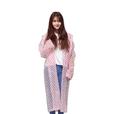
A Thin Film Raincoat can use a basic hooded shape for short-duration protection, while other lightweight models may add longer body coverage or contrasting sleeves. Yinhong's lightweight category includes hooded, long, printed, and loose-fitting designs, showing that the same lightweight material concept can support several garment structures.
Increasing coverage also increases material consumption and packed volume, so the pattern needs to match the intended application rather than simply maximize dimensions.
Foldability Matters Before Use
Many lightweight rain garments spend most of their time inside a backpack, suitcase, vehicle, or storage cabinet. Their value depends partly on being available when rain begins.
A Thin Film Raincoat is therefore designed around compact storage as well as wearing. Flexible film, simplified construction, and small packaging can make it easier to carry as a backup item. This is especially relevant to travel and event buyers who may distribute rainwear before weather conditions are certain. Yinhong specifically describes its disposable products as portable and foldable.
Material Options Are Expanding
PE remains common in disposable rainwear, but lightweight raincoat development also includes EVA and PEVA. These materials can provide different combinations of flexibility, thickness, weight, and reuse potential.
A Thin Film Raincoat made for occasional emergency use may prioritize low material consumption and compact packaging, while a reusable lightweight model can place more emphasis on softness and repeated wear. Yinhong's lightweight eco-friendly category includes recyclable EVA and PEVA raincoats for hiking, cycling, traveling, and commuting.
This distinction matters when buyers compare products that look similar but are intended for different operating cycles.
Printing Adds Commercial Applications
The large surface area of a Thin Film Raincoat also creates opportunities for printed graphics. Colors, logos, patterns, and event artwork can turn a simple rain garment into a branded distribution item.
For B2B programs, printing needs to be coordinated with film material, garment size, packaging, and order volume. A design created for individual emergency packs may have different print and folding requirements from one produced for a large outdoor event.
Production Efficiency Is Part of the Category
The Thin Film Raincoat category is strongly connected with high-volume manufacturing. Film-thickness control, cutting, heat sealing or edge pressing, folding, and packaging all influence unit cost and production consistency.
Because the basic structure is relatively simple, production efficiency can become as important as adding extra features. Yinhong's industry information identifies film-thickness control, automated production, and streamlined packaging as areas of production optimization.
For manufacturers and B2B buyers, it is therefore useful to evaluate material consumption and packing efficiency alongside garment specifications. The Thin Film Raincoat remains a specialized form of rainwear built around portability, quick deployment, and limited material use rather than heavy-duty construction.
