
 English
 Español
 Deutsch

A disposable raincoat may be used for only a short period, but its quality still affects how well it performs when sudden rain begins. For distributors and wholesale suppliers, checking a Raincoat That Folds into a Pouch involves more than confirming that the garment looks complete. Material condition, sealed edges, opening dimensions, and overall workmanship can all influence whether the finished product meets the intended requirements.
For lightweight rainwear, some defects are easy to overlook during a quick visual inspection. A small tear near an edge, an unevenly bonded area, or a poorly finished opening may become noticeable only when the garment is unfolded and worn. A consistent inspection process helps identify these problems before a production batch is released.
Inspecting the Film Surface
The material surface is one of the first areas to examine. Disposable raincoats commonly use lightweight plastic film, so scratches, pinholes, creases, and irregular areas deserve attention. Not every visible crease indicates a defect, but damage that compromises the material can affect its ability to keep rain away from clothing.
When inspecting a Raincoat That Folds into a Pouch, staff can check the front and back panels under suitable lighting. Particular attention should be paid to edges and areas where the film may have been stretched or handled during production. If a defect is found, the affected piece can be separated for further assessment rather than accepted based on appearance alone.
Material consistency also matters across a batch. Noticeable differences in transparency, color, or surface condition may indicate variation that needs review. The acceptable appearance should follow the agreed sample and product requirements, rather than an informal judgment made during final packing.
Checking Sealed Edges and Joining Areas
A raincoat's waterproof function depends partly on how its panels and edges are joined. Depending on the product construction, these areas may use heat sealing or another suitable joining method. An apparently neat edge is not necessarily a sound one, so visual inspection should be supported by appropriate checks of the finished construction.
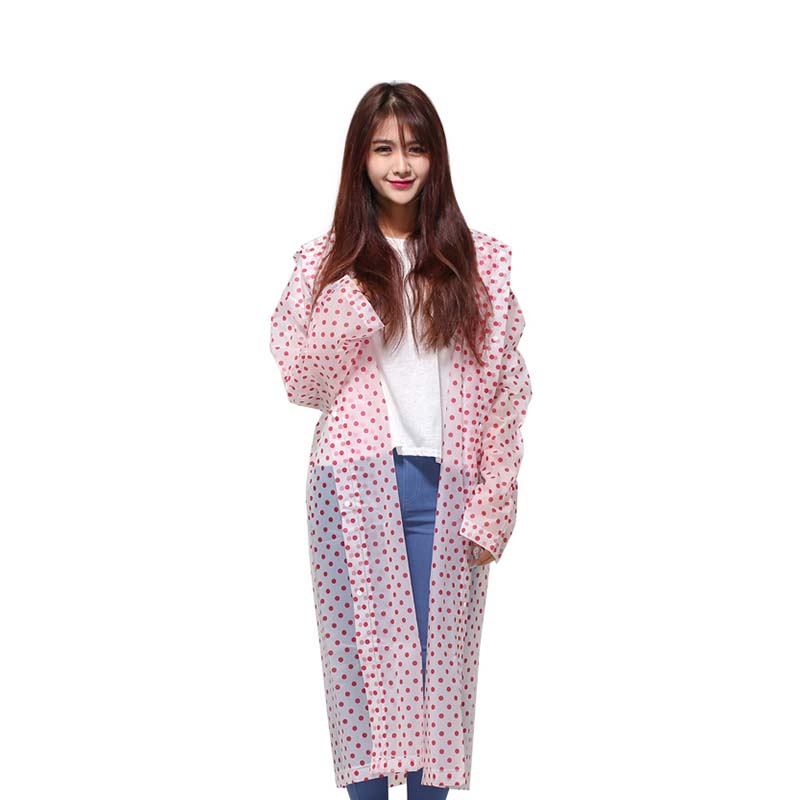
For a Raincoat That Folds into a Pouch, inspectors can look for incomplete seals, gaps, irregular bonding, or areas where the material appears damaged by processing. The neckline, arm openings, and side joins deserve attention because they form part of the garment's overall structure.
Testing methods should match the actual design. Where applicable, a controlled water test can help identify leakage through seams or damaged material. The procedure and acceptance criteria should be established for the product being manufactured; one test method should not automatically be treated as suitable for every type of disposable rainwear.
Confirming Dimensions and Garment Shape
Small differences in cutting can affect how easily a raincoat is worn. An opening that is too narrow, an uneven hem, or a noticeable difference between left and right sides may create problems even when the material itself is intact.
A Raincoat That Folds into a Pouch should therefore be checked against the approved sample or dimensional requirements. Relevant measurements may include overall length, body width, sleeve or arm-opening dimensions, and hood dimensions where a hood is included. These checks help confirm that the finished garment remains consistent with the agreed design.
Measurements do not need to be treated as a complicated exercise. The important point is to use the same reference points and measuring method throughout inspection. If the product is supplied in multiple sizes, each size should be assessed against its own approved dimensions rather than compared with a single general standard.
Reviewing Openings and Finished Details
The garment's openings can reveal workmanship issues that are easy to miss when inspectors focus only on the main panels. The neck opening, hood edge, arm openings, and front closure, if present, should be examined for uneven cutting, unwanted tears, or incomplete finishing.
For a Raincoat That Folds into a Pouch, these details also influence ease of use. An opening with rough or irregular edges may be uncomfortable to handle, while an incorrectly positioned closure can make the garment harder to put on. The inspection should reflect the actual design, without requiring features that the product does not include.
Appearance checks should also cover the garment as a whole. Obvious stains, unwanted marks, and inconsistent finishing can affect the acceptability of a batch, especially when products are supplied to distributors serving retail or promotional markets.
Establishing a Consistent Inspection Routine
A practical inspection process combines visual checks, dimensional review, and suitable functional testing. Inspectors can first examine the material, then review sealed or joined areas, check important measurements, and assess the finished garment against the approved sample. The sequence can be adapted to the production line and the product's construction.
For bulk orders of a Raincoat That Folds into a Pouch, the sampling plan and acceptance criteria should be agreed before production. If a defect appears repeatedly, the issue should be reviewed across the relevant batch rather than treated as an isolated piece. Records of inspection results can also help the factory identify recurring problems and improve process consistency.
The inspection scope should remain proportionate to the product. A disposable raincoat is not expected to meet every durability requirement associated with heavy-duty reusable rainwear. Its quality should instead be assessed against its intended use, specified construction, and agreed performance requirements.
Quality Begins Before Shipment
A Raincoat That Folds into a Pouch should be evaluated as a finished garment, not simply as a piece of lightweight film. Surface condition, joining quality, dimensions, and finishing details each provide useful information about production consistency.
For overseas wholesalers and distributors, agreeing on inspection criteria before an order enters production can reduce uncertainty when reviewing samples and bulk goods. For the factory, applying the same criteria consistently helps distinguish acceptable variation from defects that require correction. This straightforward approach supports more reliable quality control without adding unnecessary complexity to a disposable rainwear product.
