
 English
 Español
 Deutsch

The first drops at an outdoor event send staff to the same carton, and what happens next depends on how each Single Use Rain Poncho is packed. A person holding a dozen loose film sheets in drizzle cannot sort them by size or find the head opening. A flat, individually packed unit that opens in one motion turns a crowd problem into a short queue.
Folded Size Sets Handout Capacity
A Single Use Rain Poncho made from thin PE film weighs only a few grams and folds small enough to fit a jacket pocket. That matters because event teams carry stock on belts, in crates and in volunteers’ backpacks, and every extra centimetre of folded volume reduces the number of units each person can carry. Teams planning a stadium or festival gate usually estimate how many ponchos one person must carry to cover a crowd during a short downpour, then check the carton quantities against that figure. Compact, uniform folds also stack neatly on a pallet, which helps when stock travels from the warehouse to several entrances.
Opening Individual Packs With Wet Hands
Individual packaging makes distribution cleaner, but the pack itself must open in wet conditions. A tear notch, a smooth poly bag or a printed sleeve may be easier to open than a tightly sealed envelope. The fold order inside matters just as much: when the head opening sits at the outer fold, the person can shake the Single Use Rain Poncho once and locate the opening without turning it around. Event staff can test this by opening ten packs in a row with damp gloves, then use the results to evaluate the packing method.
Film Thickness and Head Opening Requirements
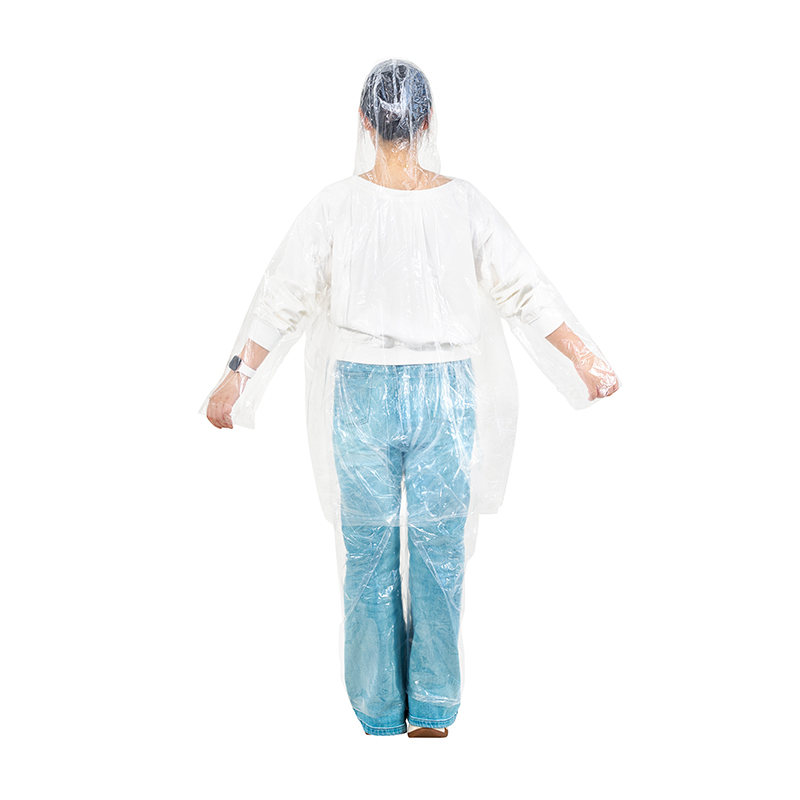
Thin film keeps cost and weight down, but it still has to withstand being pulled over hair, glasses and a backpack strap. Heat-sealed seams, a drape-style cut and a head opening sized for the intended users are common considerations. The opening is a potential stress point because hands pull on the surrounding film during use; a clean die-cut line and suitable edge construction can help reduce tearing. For a Single Use Rain Poncho, the practical goal is to provide coverage during an event without making the garment difficult to put on or remove.
Colour Options and Printed Logos
Clear film lets people see the clothing underneath, which some wearers prefer at concerts and tourist sites, while coloured film helps staff identify groups in a crowd. Event organisers and brand owners often add a printed logo to the chest area, since a Single Use Rain Poncho can provide visible branding when worn by attendees. Print size and ink placement need to be considered alongside the film and folding method, because a large printed area may affect how the material folds and packs. For sponsors, using a consistent shade across multiple events can help maintain a recognisable visual identity.
Storage Between Event Seasons
A Single Use Rain Poncho may sit in a storeroom for months before an event, so carton storage deserves attention. Dry storage away from direct sunlight and excessive heat helps protect the packaging and film, while appropriate stacking prevents cartons at the bottom from being crushed. Labels showing size, colour and quantity let staff find the right carton without opening several. Teams that keep reserve stock for unexpected storms, such as during an exhibition, may store it near the main entrance or another accessible distribution point rather than deep in the warehouse.
Event teams rarely judge rain gear by the poncho alone. They judge it by how quickly a crowd can be covered. A Single Use Rain Poncho that packs compactly, opens easily and accommodates the required printing can help staff distribute rain protection efficiently when the weather changes.
