
 English
 Español
 Deutsch
Rainwear for Cycling needs to protect more than the rider's upper body. During cycling, rain can reach the shoulders, arms, legs, backpack, and areas around the handlebars as the rider changes position. A rain poncho designed for electric scooters and similar two-wheel vehicles therefore needs a different balance between coverage, movement, visibility, and quick use than ordinary walking rainwear. For B2B buyers, these functional details also influence material selection, pattern development, and bulk production consistency.
Coverage Has to Follow the Riding Position
A cyclist does not maintain the same posture as someone walking. The upper body leans forward, the arms extend toward the handlebars, and the lower part of the garment can move with air resistance. A short rain jacket may protect the torso while leaving exposed areas around the thighs and lower arms.
The loose structure used in this category addresses that difference by extending coverage beyond the central body area. The manufacturer lists several electric-vehicle rainwear styles, including hooded rain ponchos, enlarged raincoats, front-opening designs, and loose-fitting cape structures. This range shows how coverage can be adjusted according to the intended riding environment.
For Rainwear for Cycling, the pattern needs enough material to cover the rider while avoiding unnecessary restriction around the arms. A generous cut can also accommodate everyday clothing underneath, which matters when the same product serves commuters during different seasons.
The relationship between garment length and riding posture is particularly important. If the rear section is too short, water can reach clothing or a backpack when the rider leans forward. If the front section interferes with hand movement, however, additional coverage can create a usability problem.
Poncho Construction Can Extend Protection to Bags
Cyclists often carry backpacks, delivery bags, or other equipment. Conventional fitted rain jackets cover the wearer's torso but may leave a large portion of a backpack exposed. A loose poncho structure can extend over both the rider and part of the carried load.
The manufacturer's outdoor raincoat information specifically describes loose-fitting poncho designs that can cover the body and backpack. This structural approach gives Rainwear for Cycling another practical function: reducing the number of separate waterproof accessories needed during commuting or delivery work.
For manufacturers, this requires careful pattern proportions. The garment needs enough width around the back and shoulders without creating excessive fabric that catches on surrounding objects. Hood dimensions, sleeve openings, side coverage, and front length all contribute to the final wearing experience.
For private-label buyers, these dimensions can become useful customization points. A distributor serving urban commuters may prefer a compact version, while a delivery-oriented program may require extended rear coverage for larger bags.
Material Selection Affects Movement and Handling
Rainwear material needs to remain waterproof while still allowing the garment to move with the rider. The manufacturer identifies PVC and EVA among its rainwear materials, while its product range includes lightweight and thickened versions for different applications.
For Rainwear for Cycling, material thickness should be considered alongside flexibility. A very rigid sheet can make repeated arm movement uncomfortable, while an excessively thin material may not provide the durability expected from a reusable product.
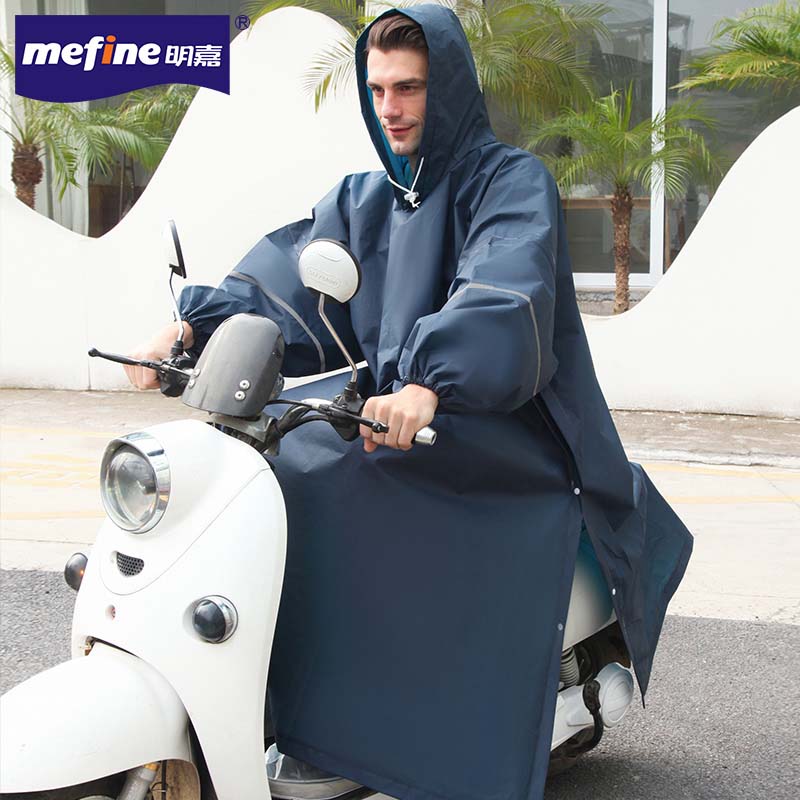
EVA is used in the manufacturer's rain poncho range because it provides a combination of flexibility and light weight. The company also describes EVA rainwear as suitable for commuting, travel, and light outdoor use.
Production methods also influence the finished garment. Waterproof rainwear can use heat-sealed or bonded construction to reduce openings created by conventional stitching. The manufacturer's product information highlights seamless bonding and heat-sealed edging within its rainwear production approach.
For bulk production, seam consistency becomes an important inspection point. Uneven sealing, incomplete bonding, or dimensional variation around openings can affect the finished garment even when the raw material meets the required specification.
Hood and Front Details Matter During Movement
A hood performs a different role during cycling than during walking. Wind created by movement can push the hood backward, while rain entering from the front can reduce visibility if the opening is poorly proportioned.
The manufacturer's electric-scooter rain poncho range includes hooded designs, reflecting the need to combine head coverage with the larger body structure. For Rainwear for Cycling, hood depth, brim shape, neck opening, and adjustment method should be developed together rather than treated as separate decorative details.
Front construction also affects how quickly the garment can be put on. A pullover structure minimizes separate fastening components, while a front-opening design can make dressing and removal easier. These differences can suit different sales channels without requiring a completely different rainwear category.
For B2B buyers, this creates opportunities to develop several SKUs around one manufacturing platform. Color, printing, thickness, hood design, opening style, and packaging can be adjusted according to the target market.
Production Control Supports Consistent Bulk Orders
A Rainwear for Cycling program needs stable dimensions across production because small pattern differences can change how the garment covers the rider or backpack. Quality control should therefore examine the finished garment rather than relying only on raw-material inspection.
Key checks can include material thickness, sealing condition, hood dimensions, garment length, opening size, printed pattern alignment, and overall appearance. For products using heat-sealed construction, the sealed areas deserve particular attention because they contribute directly to waterproof performance.
Zhejiang Yinhong New Material Technology Co., Ltd. identifies itself as a raincoat manufacturer focused on waterproof protection and supports OEM/ODM production. Its product range includes multiple adult raincoat structures, including electric-scooter ponchos and enlarged electric-vehicle raincoats.
For overseas distributors, Rainwear for Cycling can therefore be developed as part of a wider mobility rainwear line rather than as a single-purpose garment. Different lengths, materials, colors, printing methods, and coverage structures can serve commuting, electric-scooter use, delivery work, and recreational cycling while sharing the same basic waterproofing and production framework.
