
 English
 Español
 Deutsch
An outdoor retailer stocking shelves for the spring hiking season faces a sourcing question that a general commuter-rainwear order does not: will this garment hold up across hours of sustained movement on variable terrain, not just a five-minute walk between a car and an office door. A Lightweight Raincoat for Hiking needs to satisfy that use case specifically, and buyers who skip this evaluation step often discover the gap only after return requests start arriving from customers.
Weight Alone Does Not Confirm Trail Suitability
Retailers comparing supplier quotes sometimes rank options by gram weight alone, but a Lightweight Raincoat for Hiking needs more than a low number on the spec sheet. Trail use involves repeated arm movement, pack-strap friction across the shoulders, and exposure to branches or rough terrain that a commuter-focused poncho was never engineered to withstand. Buyers should request seam-strength data alongside weight figures for a Lightweight Raincoat for Hiking under consideration, since a garment can be light enough to satisfy a packing-weight target while still tearing at the shoulder seam after a few hours on uneven trail.
Breathability Matters as Much as Waterproofing
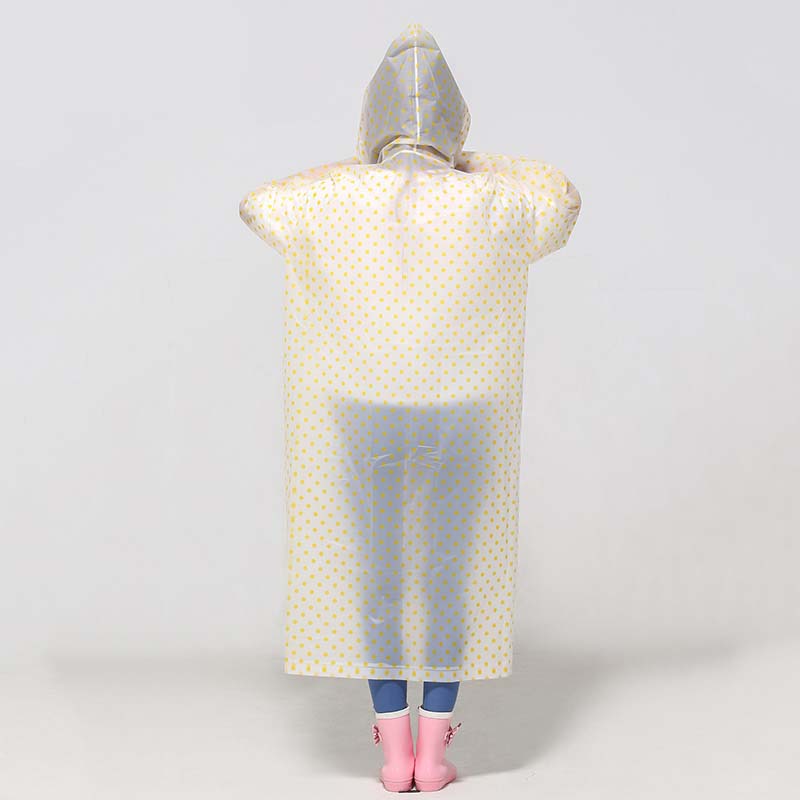
A hiker generates significant body heat during sustained movement, and a breathable rain shell that traps that heat inside becomes uncomfortable well before it becomes genuinely wet from rain. Buyers sourcing for this category should ask suppliers about ventilation features — underarm vents, adjustable hood openings, or looser cut through the torso — since a fully sealed, non-breathable poncho performs worse for active hikers than for someone standing at a bus stop. This tradeoff between full waterproof sealing and ventilation is a design decision the supplier makes at the pattern stage, not something that can be corrected after production.
A Buyer's Comparison Checklist for a Lightweight Raincoat for Hiking
|
Sourcing Question |
Why It Matters for Hiking Use |
|
What is the seam reinforcement at stress points? |
Repeated arm movement concentrates wear at shoulders |
|
Does the hood stay in place during movement? |
Loose hoods slip during active use, unlike stationary wear |
|
Is there ventilation built into the design? |
Sustained exertion generates heat that needs to escape |
|
What is the packed size versus unpacked coverage? |
Trail users carry limited pack space |
|
Has the seam been fold-cycle tested? |
Trail gear gets packed and unpacked repeatedly |
Packability Without Sacrificing Coverage
Outdoor retailers know that customers expect a packable hiking raincoat to compress into a small stuff sack, but coverage length matters just as much as packed size once a Lightweight Raincoat for Hiking is actually worn on trail. A raincoat cut too short to clear a backpack's hip belt leaves a gap where rain runs directly onto the lower back, a detail that only becomes apparent during real trail testing rather than in a folded product photo. Buyers requesting samples should specifically test the garment while wearing a loaded pack, not just try it on standing still in a showroom.
Certification and Testing Documentation to Request
Before placing a bulk order for outdoor rain gear, retailers should request the supplier's waterproof rating test method for a Lightweight Raincoat for Hiking and confirm it reflects sustained exposure rather than a brief splash test. Ask specifically whether seam-sealed samples were tested after simulated pack-and-unpack cycles, since that condition mirrors actual hiking use far more closely than a flat, unfolded waterproof test does. A trail-ready raincoat that has only been tested in its original packaging has not been evaluated under the conditions a Lightweight Raincoat for Hiking will actually face once sold.
Negotiating Private-Label Production for Outdoor Retail
Retailers building a private-label hiking line should confirm early in sourcing conversations whether custom color, hood shape, or hem length adjustments require new pattern development or can be layered onto an existing base pattern for a Lightweight Raincoat for Hiking. Working from an existing base pattern typically shortens sample turnaround and keeps minimum order quantities lower, which matters for retailers testing a new private-label line before committing to a full season of inventory across multiple sizes and colorways.
