
 English
 Español
 Deutsch
Outerwear buyers walking a trade show floor this season keep circling back to the same question: what actually separates a long waterproof walking coat that survives a school year of rain from one that soaks through by October? The answer has less to do with branding and more to do with seam construction, fabric coating, and how a factory tests these details before a container ever ships.
Fabric Ratings Buyers Now Request
Wholesale buyers used to accept a vague "waterproof" label on a spec sheet. Today, procurement teams ask for hydrostatic head numbers before placing an order, since a coating rated below 3,000mm lets water through under sustained pressure like a child sitting on wet ground. A long waterproof walking coat built for daily school use typically needs a rating closer to 5,000mm or higher, paired with a breathability figure that keeps a child from overheating during recess or a longer walk to the bus stop.
Coating type matters as much as the rating itself. PU coatings cost less to produce but degrade faster under repeated folding and washing, while PVC-free, water-based coatings hold up longer across a school year of daily wear. Distributors sourcing a long waterproof walking coat for climates with sustained rainfall increasingly request coating composition alongside the hydrostatic number, since the two figures together predict how a garment performs after fifty wash cycles rather than in a single lab test.
Seam Taping and Where Coats Tend to Fail
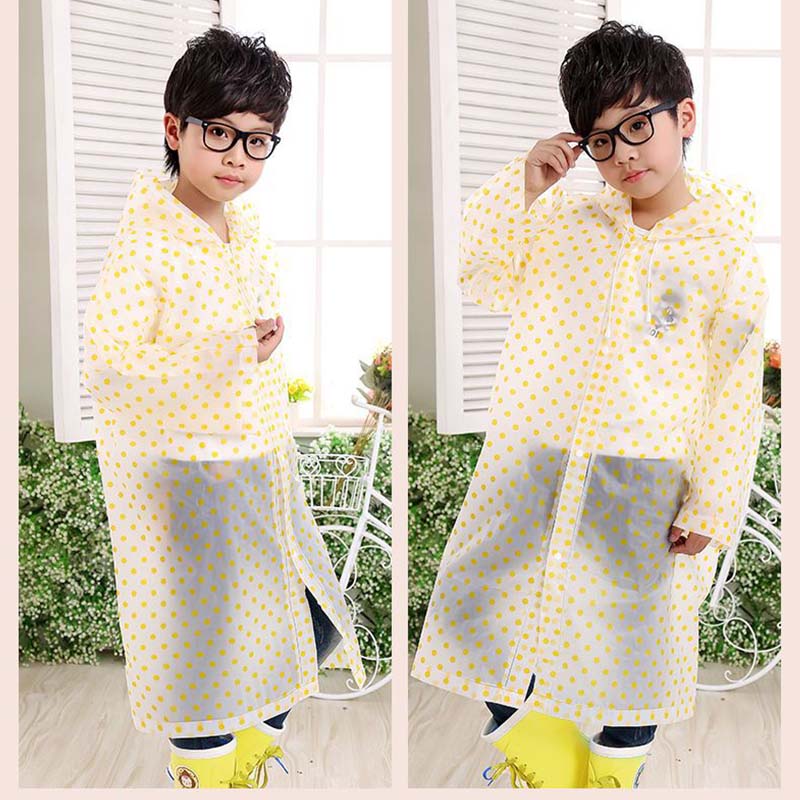
Fabric rarely fails on a rain garment before the seams do. Needle holes at every stitch line create a path for water unless a factory applies heat-sealed tape over each seam, and the quality of that tape decides whether a coat holds up through a full season or starts leaking at the shoulders within weeks. A long waterproof walking coat with fully taped seams at the hood, cuffs, and hem costs more to produce but generates far fewer returns than one taped only at the main body panels.
|
Coat Feature |
Buyer Concern |
Common Standard |
|
Hydrostatic head |
Rain resistance under pressure |
5,000mm or higher |
|
Seam taping |
Leak points at stitch lines |
Fully taped, not spot-taped |
|
Coating type |
Durability over wash cycles |
PU or PVC-free water-based |
|
Hem length |
Coverage while walking or seated |
Below the knee for school wear |
Length and Fit for Active Wear
The word "walking" in this category signals a specific use case that differs from a rain shell built for standing at a bus stop. A child moving through a school day needs a hem long enough to cover the legs while seated in a classroom chair, yet short enough not to trip over during a walk across a wet playground. Factories cutting a long waterproof walking coat for this age group tend to grade the hem length against torso height rather than total garment size, since a coat that only fits standing still fails the moment a child sits down or climbs stairs.
Sleeve length draws similar attention. A cuff that rides up during arm movement lets water in at the wrist, so pattern makers add adjustable elastic or hook-and-loop tabs at this point specifically for coats marketed as breathable rainwear rather than stationary rain shells.
Sourcing Considerations for Distributors
Buyers auditing a new supplier increasingly ask for wash-cycle test data alongside the usual certification paperwork. Oeko-Tex certification confirms chemical safety in the fabric, but it says nothing about how a coating holds up after repeated machine washing, which is why some factories now publish internal wash-test results covering fifty or more cycles for their long waterproof walking coat lines.
Reflective trim placement has also become a line item on B2B order sheets rather than an afterthought. Coats intended for early morning school runs or after-dark commutes need reflective strips positioned at the shoulders and hem where a passing car's headlights actually catch them, not just decorative piping that looks reflective under store lighting.
RAINCOAT FACTORY, working within this category, structures its long waterproof walking coat production around taped seams, graded hem lengths, and wash-tested coatings rather than a single waterproof claim on a hangtag, giving distributors documentation to check against instead of a generic children's rainwear description. Buyers comparing suppliers for this style of waterproof rain jacket now weigh these details as closely as unit price when deciding where to place a bulk order.
